
Making solid decisions involves a systematic approach. Here are steps to help you make a well-informed and confident decision:
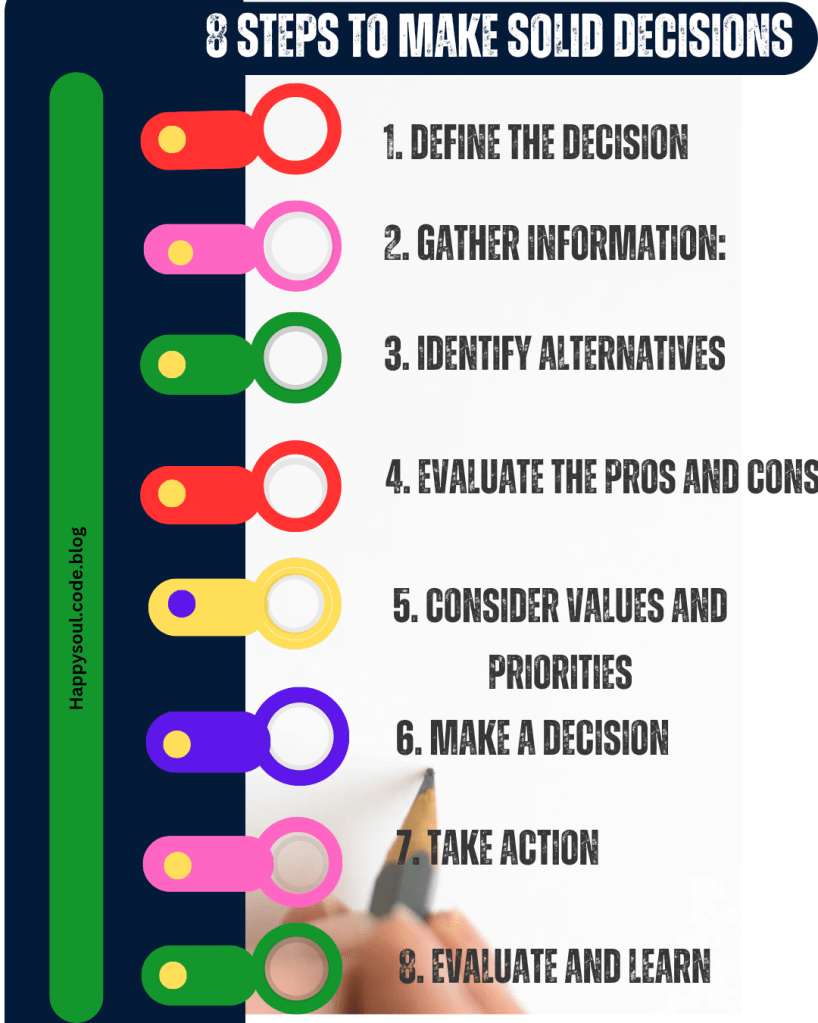
1. Define the decision
Clearly articulate the decision you need to make. Identify the problem or opportunity that needs a resolution. The more specific and focused your decision is, the easier it will be to evaluate your options.

2. Gather information
Collect relevant and reliable information to ensure you have a comprehensive understanding of the situation. Seek information from different sources, evaluate the credibility, and consider various perspectives to gain a well-rounded view.
3. Identify alternatives
Generate a list of possible options or solutions. Brainstorm different approaches, considering both conventional and creative alternatives. Aim for a variety of choices to have a comprehensive range of possibilities.
4. Evaluate the pros and cons
Analyze the advantages and disadvantages of each alternative. Consider the potential outcomes, risks, and consequences associated with each option. Assign weights or priorities to factors that are most important to you.
5. Consider values and priorities
Reflect on your personal values, beliefs, and long-term goals. Assess how each alternative aligns with your values and supports your priorities. This step helps ensure that your decision is in harmony with your principles and what you truly want to achieve.
6. Make a decision
Based on the information, evaluation, and alignment with your values, select the alternative that seems most suitable. Trust your intuition and judgment. Remember that making a decision, even if it turns out to be imperfect, is often better than indecision or inaction.
7. Take action
Once you have made your decision, create a plan of action. Break down the steps needed to implement your decision. Set clear goals, deadlines, and milestones to keep you on track. Be prepared to adapt your plan if circumstances change.
8. Evaluate and learn
Regularly review and evaluate the outcomes of your decision. Reflect on what worked well and what could have been improved. Learn from the experience to enhance your future decision-making skills.
C
Remember, decision-making is a skill that improves with practice. Each decision provides an opportunity for growth and learning. By following these steps, you can make more informed, thoughtful, and solid decisions.

 Bring the inside out